Bonded Cleaning Business, What the Bond Covers and Costs
A bonded cleaning business holds a janitorial bond, a type of fidelity bond that reimburses a client if one of the business's workers steals from them. It is not a license, and in most places it is not a legal requirement.
Clients, property managers and commercial buyers ask for it because it gives them a route to repayment that does not depend on suing the cleaner.
Getting one is quick. The business applies to a surety company or an insurance agent, chooses a bond amount, and pays an annual premium set mainly by the bond amount and the owner's credit. What takes more care is reading what the bond actually pays for, because it covers far less than many owners assume.
What a janitorial bond covers
The bond answers one specific worry, which is that someone the client let into their home or building will take something. The Surety and Fidelity Association of America's explanation of fidelity bonds describes them as protection against losses caused by employees' dishonesty, and a janitorial bond applies that to the client's property.
That narrow purpose is why the bond sits next to insurance rather than replacing it. The difference is clearest set out in one place.
| Protection | Pays for | Main beneficiary |
|---|---|---|
| Janitorial bond | Theft of a client's property by a worker | The client |
| General liability | Accidental damage and injury on the job | The business, and the client it pays |
| Workers' compensation | Injuries to the business's own employees | The employee |
So a cleaner who breaks a vase claims on liability insurance, not the bond. Our guide to cleaning business insurance covers that side.
What the bond does not cover
The gaps matter as much as the cover, because they decide whether a claim is paid. Read the bond form for each of these before buying.
- Accidents and breakage. These are liability insurance claims, not bond claims.
- Theft by the owner. Many janitorial bonds cover employees only, which matters to a solo cleaner.
- Losses above the bond amount. The bond pays up to its limit and no further.
- Unproven theft. Some bonds pay only once the worker is convicted or admits the theft, so check the claim conditions.
The second point surprises solo owners most. A one-person business with an employees-only bond is holding a certificate that covers nobody, so ask whether the bond names the owner before paying for it.
Who expects a cleaner to be bonded
Bonding is mostly a client expectation, so the demand for it depends on the kind of clients the business wants. Some ask every time and some never ask.
- Commercial clients and building managers. Office and facility buyers often list a bond in their requirements alongside insurance certificates.
- Property managers. Firms that hand over keys to many units commonly require one.
- Higher-end residential clients. Homeowners with valuables often ask, and "bonded and insured" answers them quickly.
- Some public and local contracts. These can require contract bonds as well, which are covered further down.
Homeowners weigh these credentials as well, not only commercial buyers. Across the students we work with at the Cleaning Business Institute, about one in four of the homeowners who booked them over the past two years said proof of being licensed and insured was the main thing they checked before choosing. Our guide to getting cleaning contracts covers what else those buyers check.
How to get a janitorial bond
The application is short, and most owners finish it within a few days. These steps cover it in order.
- Settle the business details. Have the legal name, structure, address and EIN ready, since the bond is issued in the business's name.
- Choose the bond amount. If a client or contract states one, use it. Otherwise pick an amount that reflects the value of what workers can reach in clients' homes and buildings.
- Ask for quotes. Approach the agent who handles the business's liability insurance, and at least one surety agency, for a like-for-like comparison.
- Answer the underwriting questions. Expect questions about the number of employees, years in business and past claims, and usually a credit check on the owner.
- Read the form, then pay. Confirm who is covered and the claim conditions, pay the premium, and keep the certificate.
When the bond is issued, the certificate is what clients see. Keep a copy ready to send with proposals, and note the renewal date with the business's other annual deadlines.
Timing matters too. A commercial buyer who asks for proof of a bond usually wants it within days, not weeks, so an owner planning to bid should have the bond in place before sending the first proposal rather than after being asked.
What decides the cost of a bond
The premium is a percentage of the bond amount, set by the surety for each applicant. Owners cannot look up a fixed price, but they can see what moves it.
The worked figure below is an illustration on an assumed rate, not a quote. It shows how the bond amount and the rate combine.
Double the amount and the premium roughly doubles at the same rate. A weaker credit file raises the rate instead.
The rate is the part an owner can influence. These are the factors sureties usually weigh.
- The owner's credit. Usually the largest factor for a small business.
- The number of employees covered. More people with access means more exposure.
- Claims history. A past claim raises the rate or makes cover harder to get.
- Time in business. A track record can bring the rate down at renewal.
Read the indemnity terms as well. Depending on how the bond is written, the surety may seek repayment from the business after paying a client, which is the key way a bond differs from insurance.
Contract bonds for larger and public work
A janitorial bond protects against theft. Larger contracts, especially public ones, can also ask for contract bonds, which guarantee that the business will honour a bid, finish the work, or pay its suppliers.
These are underwritten more closely, looking at the business's finances and track record. The Small Business Administration's surety bond program guarantees bid, payment and performance bonds for small businesses that might not meet a surety's usual criteria, which can open public cleaning contracts to a smaller firm.
Most new businesses will not need a contract bond in their first year. It becomes relevant when the business starts bidding for multi-year building contracts, which is also when being licensed and insured stops being a selling point and becomes the minimum.
Using bonded status honestly with clients
Once the certificate arrives, the bond becomes part of how the business presents itself. Used carefully, it shortens the conversation with a cautious client, and used loosely it creates a promise the business cannot keep.
A few habits keep the claim accurate.
- Say "bonded" only while the bond is in force. Remove it from the website, quotes and vehicle the day a bond lapses.
- Send the certificate, not just the word. Commercial buyers will ask for it, and attaching it to proposals saves a round of emails.
- Do not describe the bond as insurance. If a client believes it covers breakage, the first accident becomes a dispute.
- Tell the surety about changes. New staff, a new name or a new structure can all affect who the bond covers.
The same care applies to the wider phrase "licensed, bonded and insured". Each word should match a document the business can produce on request, and the cleaning business proposal template has space to list all three with their numbers and dates.
Where the course covers bonding and protection
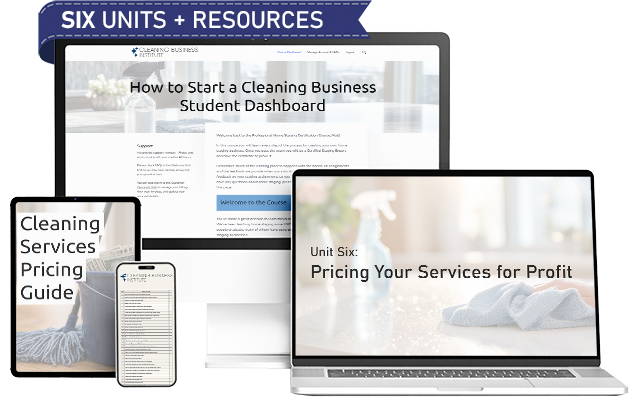
The protections a cleaning business carries are introduced in Unit 1 of the course, Cleaning Business Foundations, as part of the legal basics of structures, licenses and insurance. Unit 2, Setting Up Your Business, covers the registrations and policies that sit alongside them. Both are in the Fundamentals Course.
Bonding matters most once others clean under the business's name, and that is the ground of the Fast Track Course. Its Unit 9 covers vetting staff, including a paid working session before anyone holds a key, and Unit 10 covers adding commercial contracts.
Ready to get started?
Our step-by-step courses take you from where you are now to a credential you can show, with templates, an online exam, and a 30-day money-back guarantee.
See the courses