How to Start a Cleaning Business With No Experience
You can start a cleaning business with no experience, because residential cleaning needs no license or formal qualification in most places. What you do need is a cleaning method you can repeat to the same standard every time, and proof a stranger can check, such as reviews, photos and an insurance certificate. Both can be built in a few weeks before the first paying client.
The gap between cleaning your own home and cleaning someone else's is real, but it is narrower than it looks. It comes down to speed, consistency and trust, and each of those can be practiced deliberately rather than waited for.
What experience clients actually look for
Clients rarely ask how many years someone has cleaned. They want to know whether the cleaner will turn up, do the same thorough job every time, and be safe to leave alone in their home. Experience is just one way of showing those things, and a new owner can show them in other ways.
The field itself sets a low formal bar. On O*NET's profile of maids and housekeeping cleaners, 45% of respondents said a new hire needs less than a high school diploma, and training is mostly on the job.
Plenty of owners start from the same place. Here at the Cleaning Business Institute, a little under half of the students who enrolled over the past two years had never been paid to clean anyone else's home.
The table below lines up the questions clients have in mind with the evidence a new owner can offer instead of a long track record.
| The client wonders | Evidence a new owner can show |
|---|---|
| Will they do a good job? | Before and after photos and a written checklist |
| Will they turn up? | Reviews that mention punctuality, and quick replies |
| Can I trust them in my home? | References, a clear agreement and a background check |
| What if something breaks? | A current liability insurance certificate |
| Will it be the same next time? | The same checklist, followed every visit |
Only the first row depends on cleaning skill. The other four depend on habits and paperwork, which is why an organized beginner can look more dependable than a skilled cleaner who is vague about times and prices.
Build the cleaning skill first
Skill still matters, because it decides how long each job takes and therefore whether the price works. Professional cleaning differs from home cleaning less in the products than in the method. A professional follows the same sequence in every room, so nothing is missed and nothing is cleaned twice.
The habits below make up that method. None of them needs special equipment, and all of them can be practiced at home this week.
- Top to bottom
- Dust high surfaces first so falling dirt lands on areas you have not cleaned yet.
- Dry before wet
- Dust and vacuum before wiping or mopping, so you never push wet dirt around.
- One direction
- Work around each room clockwise or counterclockwise and finish where you started.
- Color-coded cloths
- One cloth color for bathrooms and another for kitchens, so germs never travel between them.
- A fixed checklist
- The same tasks in the same order every visit, which is what makes the result consistent.
Practice turns those habits into speed, and speed is what makes a price profitable. If a clean takes five hours the first time and three once the sequence is automatic, the owner earns two thirds more per hour at the same price. A useful two-week routine looks like this:
- Clean your own home to a written checklist and time each room.
- Repeat it three or four times, cutting wasted steps each time.
- Clean a friend's home that you do not know, which tests the method in an unfamiliar layout.
- Compare your times with your quote assumptions and adjust the price or the checklist.
Learn the chemistry that keeps people safe
Speed means little if a product damages a surface or a person. Learn which products suit stone, wood and stainless steel, and never mix bleach with ammonia or acidic cleaners, because the fumes are dangerous. Disinfectants also need the surface to stay wet for the contact time printed on the label.
For product choices, the EPA's Safer Choice program helps buyers find products whose ingredients are safer for human health and the environment. Our guide to cleaning business supplies lists a starter kit by service type.
Learn the business basics alongside
The other half of the inexperience gap is running a business, and it can be learned in parallel with the cleaning. Four skills cover most of a solo owner's week:
- Pricing a job from real costs, which our guide to how to charge for cleaning services walks through.
- Scheduling visits so travel time between jobs stays short.
- Keeping simple books, with every payment and expense recorded in one place.
- Writing clear messages and agreements so expectations match before the first visit.
Free help exists for all four. A Small Business Development Center offers no-cost counseling on budgets, bookkeeping and planning in most areas. For the setup itself, our guide to setting up a cleaning business covers bank accounts, software and policies.
Earn credibility before the first paying client
Once the method is practiced and the basics are in place, the next task is turning that private skill into public proof. A handful of low-stakes jobs does most of the work, done in roughly this order:
- Buy general liability insurance before working in anyone else's home for money.
- Offer two or three friends or neighbors a reduced-price clean in exchange for honest feedback, photos and a review.
- Photograph the same spots before and after every clean, with the owner's permission.
- Ask each early client for a written review and permission to use them as a reference.
- Put the checklist, the price list and the agreement into a tidy format you can send to new inquiries.
Run it like an established business from day one
Clients judge a new cleaner on small signals long before they see a clean. An owner who answers the phone, replies to messages within a few hours and sends a written quote the same day already looks more established than many competitors with years behind them.
The first visit carries the same weight. Arriving on time in plain, tidy clothes, walking the home with the client before starting, and checking the agreed list together at the end all say "professional" without a word about experience. None of it costs money, and all of it shows up in reviews.
Honesty about being new also helps rather than hurts. Many clients like backing a new local business, and saying "I am building my client list, so I give every home extra time" is both true and reassuring. The cleaning service checklist template gives a ready-made version to show them.
Where experience does matter
Inexperience is rarely a barrier for standard home cleaning, but some work needs real training or a track record first. A new owner should leave these until the basics are solid:
- Post-construction cleaning, which involves fine dust, debris and sometimes hazardous materials.
- Medical or biohazard cleaning, which has its own training and disposal rules.
- Commercial floor care such as stripping and refinishing, which needs specialist machines.
- Work at height, such as exterior windows or gutters, which carries fall risks and safety rules.
Commercial contracts often ask for references from similar sites as well. Building a year of residential work first is the usual route, and our guide to starting a commercial cleaning business explains the step up. For the full sequence from idea to booked calendar, see the pillar guide to how to start a cleaning business.
How the course fits
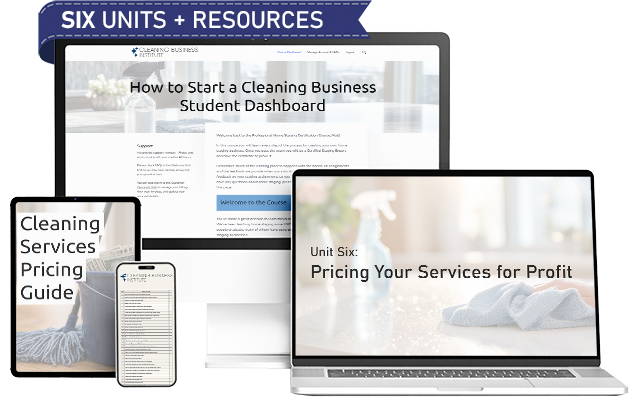
The Fundamentals Course assumes no prior experience. Its fourth unit, Cleaning Techniques and Standards, covers room-by-room methods, the products and tools that give professional results, quality standards and time management, including move-outs and deep cleans.
Client Experience and Retention covers the communication side, and Pricing Your Services for Profit covers the costing. The Fast Track Course adds Systems for Efficiency and Hiring and Growing Your Team for later on. Both end with the online exam for the C.C.B.P. credential.
Ready to get started?
Our step-by-step courses take you from where you are now to a credential you can show, with templates, an online exam, and a 30-day money-back guarantee.
See the courses